from :
 Gilsonite in Gilan-e Gharb: Extraction Practices and Industrial Application
Gilsonite, also known as natural bitumen or asphaltite, represents one of the most significant
hydrocarbon minerals formed through long-term geological processes. The deposits of Gilan-e
Gharb in western Iran are particularly notable in this regard, as they contain vein-type
accumulations of high-quality gilsonite embedded within fractured limestone and marl formations.
These geological characteristics have granted the region a distinctive place in Iran’s resource
landscape and have shaped both the mode of extraction and the industrial relevance of the mineral.
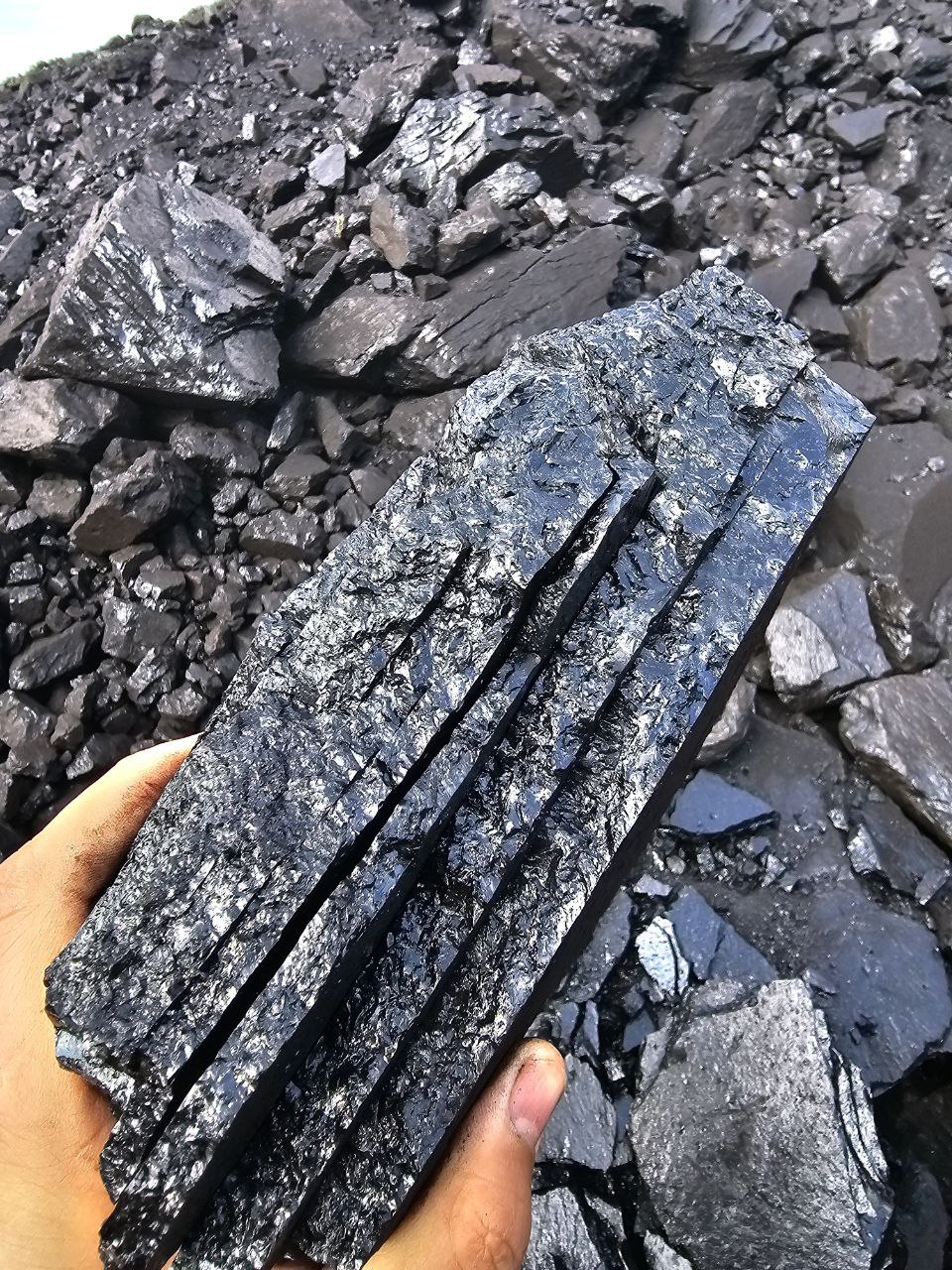
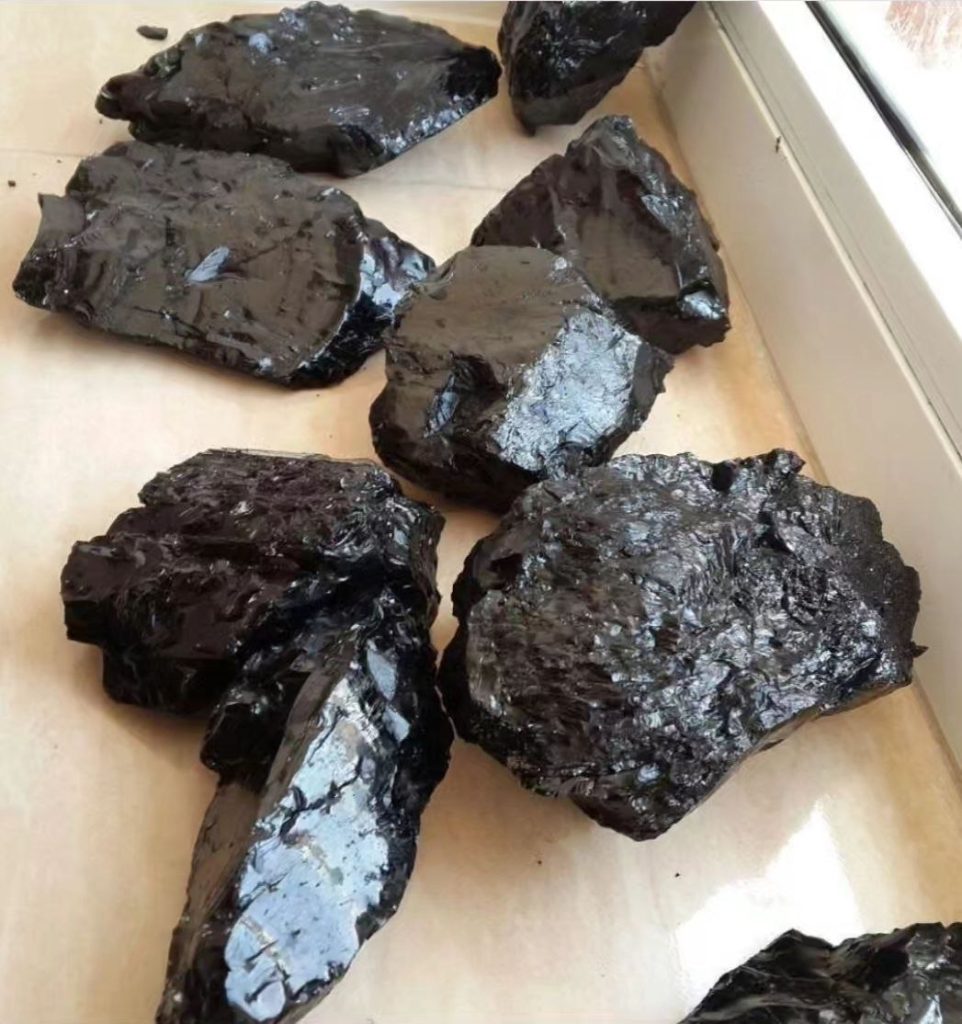
The geological setting of Gilan-e Gharb reveals gilsonite veins that often appear as narrow,
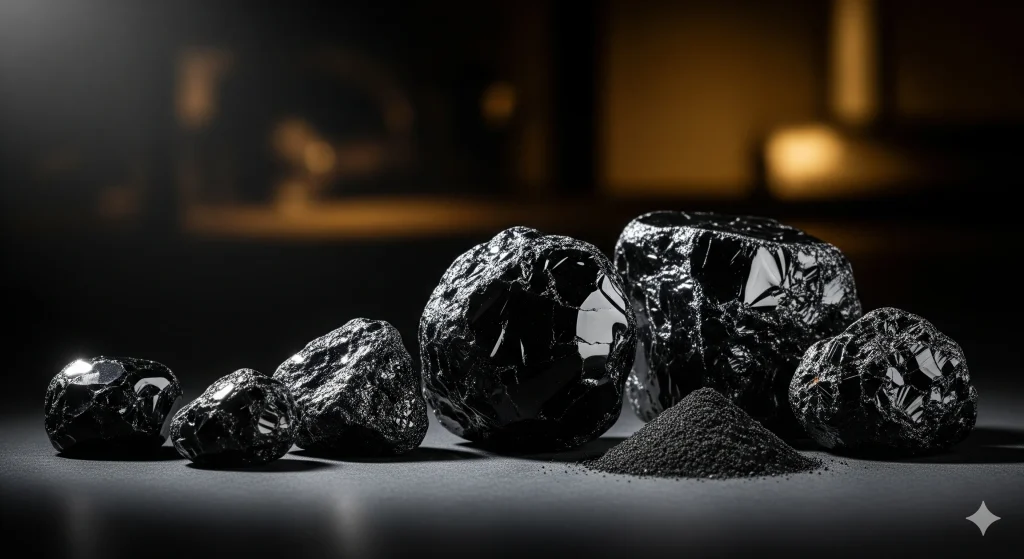
elongated fissure fillings with a dark lustrous appearance, a high carbon content, and a relatively
low ash percentage. These features not only enhance its economic value but also make it suitable
for highly specialized industrial uses. The presence of gilsonite in this region has historically
encouraged local mining activities, which over time have evolved from labor-intensive manual
practices into more structured extraction operations.
The earliest extraction methods in Gilan-e Gharb relied heavily on manual tunneling. Miners would
identify surface indicators of the vein, open shallow adits, and extend them along the fissure line.
This approach, although simple, required substantial physical effort and exposed workers to the
risks of collapse and unstable ground. As mining practices progressed, semi-mechanized methods
gradually replaced the traditional system. These contemporary techniques involve the use of
portable drilling equipment, pneumatic hammers, and basic underground transport systems that
collectively enhance both safety and efficiency. In areas where the veins emerge close to the
surface, open-pit extraction becomes feasible. This method reduces underground hazards and
facilitates more direct removal of the mineral, although its use is naturally limited to shallow
deposits. After extraction, gilsonite typically undergoes crushing, grading, and, when required,
purification to reduce ash content before being prepared for industrial consumption or export.
The economic value of gilsonite from Gilan-e Gharb is closely tied to its versatility across multiple
industries. One of the most prominent fields of use is drilling fluids in the oil and gas sector. The
chemical and thermal properties of gilsonite improve the stability of drilling muds, reduce fluid loss,
and help maintain wellbore integrity in challenging geological conditions. In road construction,
gilsonite serves as a modifying agent for paving asphalt. When blended with conventional bitumen,
it enhances resistance to rutting, thermal deformation, and cracking, thereby increasing the lifespan
of road surfaces, particularly in hot climatic zones. Beyond these infrastructural roles, gilsonite is
widely utilized in the production of ink, paint, and protective coatings, where its natural gloss, deep
coloration, and binding capacity contribute to improved product performance. The foundry industry
also benefits from its application in mold additives, where it helps control gas evolution and
strengthens molds during metal casting. In addition, gilsonite acts as a valuable precursor in the
manufacture of certain resins, carbon-based materials, and industrial chemicals, demonstrating its
importance as a flexible raw material with cross-sectoral relevance.
The deposits of Gilan-e Gharb thus represent more than a geological resource; they illustrate the
intersection of natural formation, human labor, technological adaptation, and industrial demand.
The evolution of extraction practices in the region reflects both economic pressures and the
continued search for safer, more efficient mining techniques. Meanwhile, the breadth of gilsonite’s
industrial applications underscores its enduring significance in both national and international
markets. As technology advances and the global need for specialized materials expands, the role of
gilsonite from Gilan-e Gharb is likely to become even more prominent, reinforcing the region’s place
within the broader narrative of Iran’s mineral economy.
Gilsonite in Gilan-e Gharb: Extraction Practices and Industrial Applications